
What Black Women Built
A TBBC Juneteenth Editorial
By: Livia Rose
There is a particular kind of knowledge that doesn't live in books. It lives in the way a woman carries herself into a room, shoulders back, unhurried, certain. It lives in the specific oil on the bathroom shelf, the phrase spoken over you before you left the house, the standard held for you before you were old enough to hold it for yourself. It is passed down without ceremony, received before you have language for it, and spent a lifetime being understood.
Juneteenth is a day that asks us to remember. But for Black women, remembering has never been passive. It is active, embodied, generative. What was built before us is still being built through us, in the businesses we start, the rooms we shift, the children we raise into their own becoming.
This is what Black women built. This is what we're still building.
What follows are four women who know exactly what they inherited, and what they're doing with it.
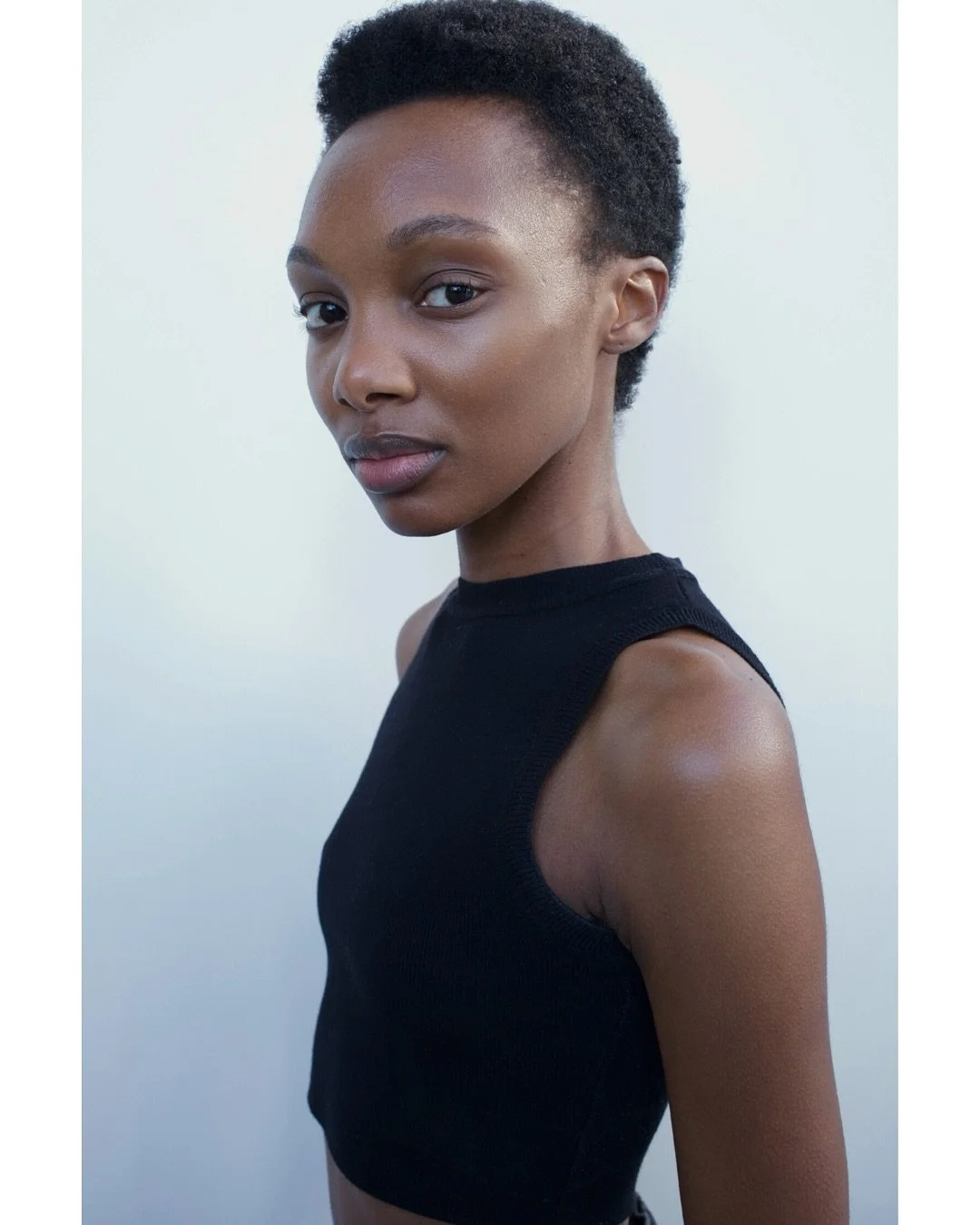
Yanii Gough
Founder, Yanii Models
Yanii Gough builds careers for a living, advocating for talent and shaping the path for the models who come after her. The foundation under all of it, she says, was laid by the women who raised her: a grandmother who gave her love, another who anchors the whole family, aunts who keep everyone connected, and a mother who pours in daily.
What is something a Black woman before you built, taught, or protected that still shapes the way you move through the world today?
The importance of family and community is something Black women before me built, protected, and passed down to me. My grandmothers, mother, and aunts all play a role in that foundation in different ways. One of my grandmothers gave me my earliest sense of love, care, and guidance, while the other is the steady center of our family, leading with strength that extends to everyone around her. My aunts have always worked to keep us connected, making sure relationships stay strong across generations, and my mother continues to pour love into our family every day while holding space as both a mother and grandmother.
From them, I learned that family is everything. They showed me what it means to stay connected, support one another, and protect the bonds that carry us forward.
What's a beauty ritual, style practice, or form of self-care that was passed down to you by another Black woman? Have you kept it, transformed it, or left it behind?
One self-care practice passed down to me from my grandmother is Haitian Black Castor Oil. She always spoke about its healing properties, and I've included it in my skincare routine. When my son started dealing with eczema, she encouraged me to use it for his skin as well. It helped soothe and moisturize it, and now it's something that continues into his generation.
What I've kept from her is more than the oil itself. It's the way she taught me to care for myself with intention and trust the wisdom passed down through family.
What does Juneteenth mean to you as a Black woman?
I carry a deep sense of gratitude for those who came before me. Their resilience is the reason I am here today, and we cannot forget that. I feel a responsibility to honor my ancestors and my elders.
In my own life, that looks like teaching my son about where he comes from, the importance of our history, and the strength of the generations before us.
How has being a Black woman influenced the way you create, imagine, or tell stories?
Being a Black woman has shaped the way I create, imagine, and tell stories through resilience, perspective, and intention. In fashion and entertainment, I've faced doubt and learned to keep pushing forward while honoring my own pace and ideas. I've also learned that I don't have to do everything alone, and the right team strengthens my vision and growth. Now, I move intentionally in the work I create and the people I collaborate with, who value my voice and ideas.
How do you take up space differently than the Black women who raised you, and what do you think made that possible?
I take up space differently from the Black women who raised me. The women in my life carried the weight of family, work, and survival without always having the space or freedom to focus on themselves or what they wanted personally.
They built the foundation for me through sacrifice, love, and a kind of strength that held everything together. Because of that, I've been able to focus more on breaking cycles, building financial stability, and exploring my creativity with fewer restrictions.
What does it mean to create a life that isn't just about surviving, but about thriving?
To me, thriving means living and working on my own terms, not just surviving. It looks like building Yanii Models, where I create opportunities, advocate for talent, protect the people I work with, and help shape careers. It also shows up in motherhood and homeschooling my son in a way that lets him learn through experience, curiosity, and real life.
For me, it's not about separating the roles. It's about building a life where entrepreneurship, parenting, and purpose coexist.
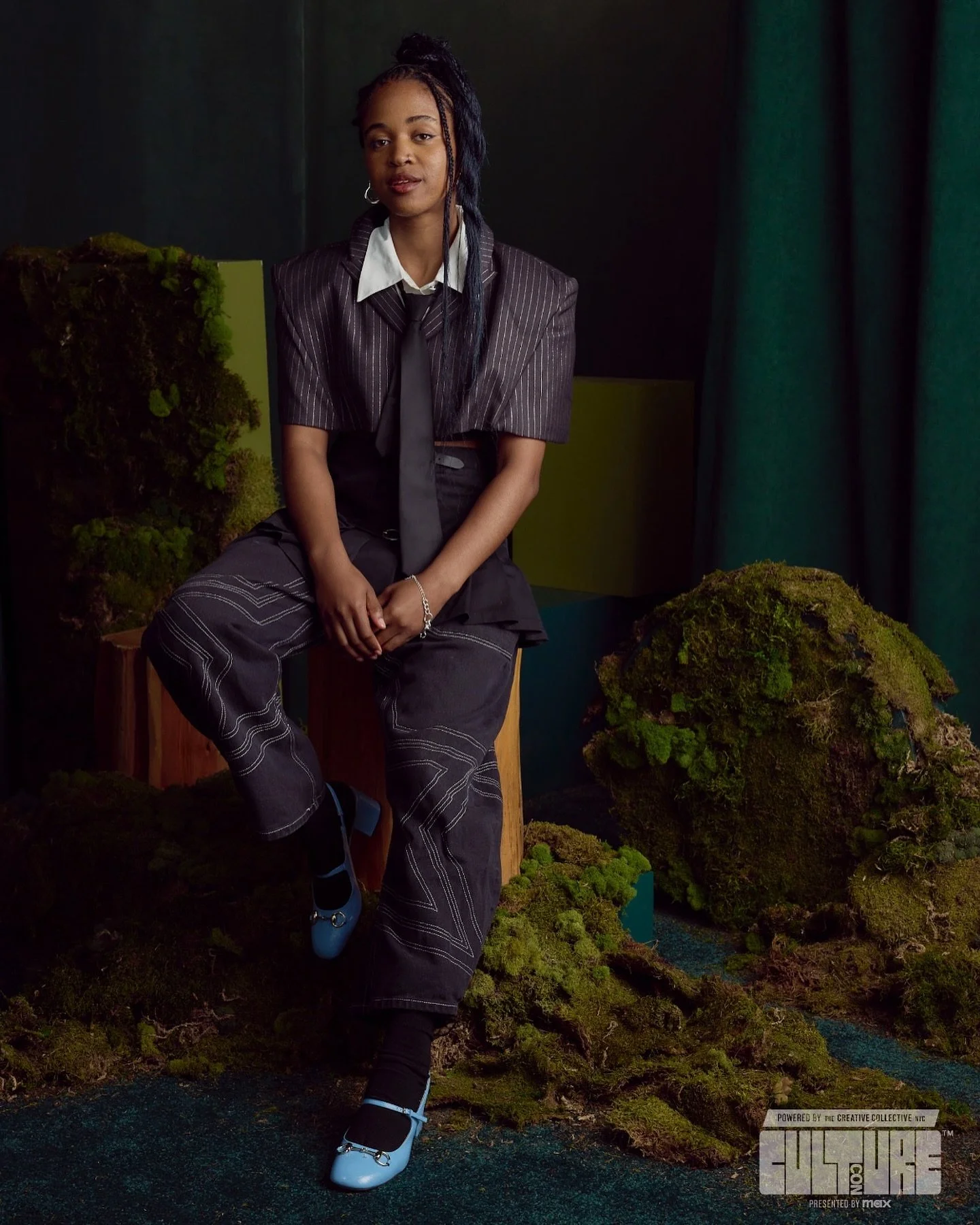
Yetunde Sapp
Fine Artist
Yetunde Sapp makes art from what often goes unrecorded: family histories, community memory, the everyday moments that deserve to be remembered. A descendant of generations in the Mississippi Delta, she sees her own existence as living proof of what her ancestors dreamed, and her work as a way to bear witness while imagining what comes next.
What is something a Black woman before you built, taught, or protected that still shapes the way you move through the world today?
I inherited creativity long before I understood it as a profession. The Black women in my family taught me that making something out of nothing is its own kind of brilliance. That creativity is not only about art, but about problem-solving, storytelling, celebration, and survival. Whether it was through music, conversation, fashion, decorating a home, or finding joy during difficult seasons, they showed me that imagination is a resource. That inheritance continues to shape how I move through the world. It reminds me to stay curious, to trust my instincts, and to create pathways where none seem to exist.
What's a beauty ritual, style practice, or form of self-care that was passed down to you by another Black woman? Have you kept it, transformed it, or left it behind?
One form of self-care that was passed down to me is the belief that words have power. The Black women around me spoke often about speaking life over yourself, naming what you hope for, and being mindful of the stories you tell about who you are. I've come to understand that beauty is not only about appearance. It's also about the relationship we have with ourselves.
Most of my family comes from the South and has roots stretching back generations in the Mississippi Delta. There is something incredibly powerful to me about being living proof of their dreams, endurance, and survival. Their lives remind me that our words, beliefs, and hopes can ripple across generations. While this is still a practice I'm actively working through, I've carried this lesson with me as a form of self-care: to speak possibility into my life and trust that the stories I tell myself help shape the future I'm growing into.
What does Juneteenth mean to you as a Black woman?
Juneteenth is a symbol of resilience. It reminds me that freedom has never been a passive gift, but something generations of Black people have fought for, protected, and expanded. As a Black woman, I think often about my own family history. Most of my ancestors come from the South and have lived in the Mississippi Delta for generations. To exist today as a descendant of their perseverance, faith, and determination feels deeply meaningful. I am living proof of lives that endured, dreamed, created, and continued despite immense challenges.
Juneteenth is both a celebration and a call to remember. It honors not only the moment news of freedom finally reached those who had been enslaved, but also the generations that followed who continued the work of building lives, families, and communities. For me, it is a reminder that resilience is not only about surviving. It is about imagining a future for those who come after you and believing they will one day arrive.
How has being a Black woman influenced the way you create, imagine, or tell stories?
As a Black woman, I understand that many of our stories, perspectives, and contributions have historically been overlooked or undervalued. Because of that, I see creativity as both an act of witnessing and an act of possibility. My work often begins with paying attention: to family histories, community memories, and everyday moments that deserve to be remembered.
At the same time, much of what I imagine and create has not existed yet. I find that incredibly empowering. Creativity allows me to pull from a deep well of inherited knowledge, memory, intuition, and imagination to envision new futures and tell stories on our own terms. Simply because others have overlooked the beauty, complexity, and brilliance of Black people does not make those stories any less worthy of being told. In fact, it makes the act of telling them even more necessary. Through my work, I hope to bear witness to what has been, while also creating space for what could be.
When did you first realize beauty could be something you defined for yourself rather than something defined for you?
Growing up with 4C hair taught me that beauty isn't something that can always be measured by mainstream standards. Even today, you rarely see 4C hair represented in the mainstream in all its fullness. As a kid, I spent hours watching hair tutorials and beauty content created by people whose hair textures looked nothing like mine. I was searching for answers, but often found myself trying to fit into examples that weren't made with me in mind.
Eventually, I realized that my hair required something different: my own attention. Through years of trial and error, I had to learn to listen to my own crown, to understand what it needed, how it moved, and how it wanted to exist. My hair is dense, textured, expansive, and often seems to defy gravity on its own. What once felt misunderstood became one of my greatest teachers.
That journey helped me understand that beauty is not about getting closer to someone else's ideal. It's about developing a relationship with yourself. My hair taught me that the things that make us unique don't need to be corrected or compared. They can simply be appreciated for what they are. In many ways, embracing my 4C hair was one of the first times I truly defined beauty for myself.
What does it mean to create a life that isn't just about surviving, but about thriving?
I love this question because it's one I'm actively living through right now. For a long time, I think I was focused on doing what needed to be done: meeting deadlines, navigating challenges, and building stability. Recently, though, I've experienced what feels like a rebirth. I've begun to recognize my own power, capability, and agency in a much deeper way.
Building beyond survival means permitting myself to imagine a life that is not solely defined by necessity. It means choosing joy, rest, creativity, and abundance as intentional parts of my future rather than rewards I have to earn after struggle. As a Black woman, that feels especially meaningful. There is so much inherited wisdom around perseverance, but there is also wisdom in believing that we deserve delight.
What excites me most is realizing that life can be far more expansive than I once imagined. We have the ability to shape our own definitions of success, fulfillment, and happiness. For me, thriving means embracing that possibility and trusting that life can be as beautiful, joyful, and meaningful as I allow it to be.
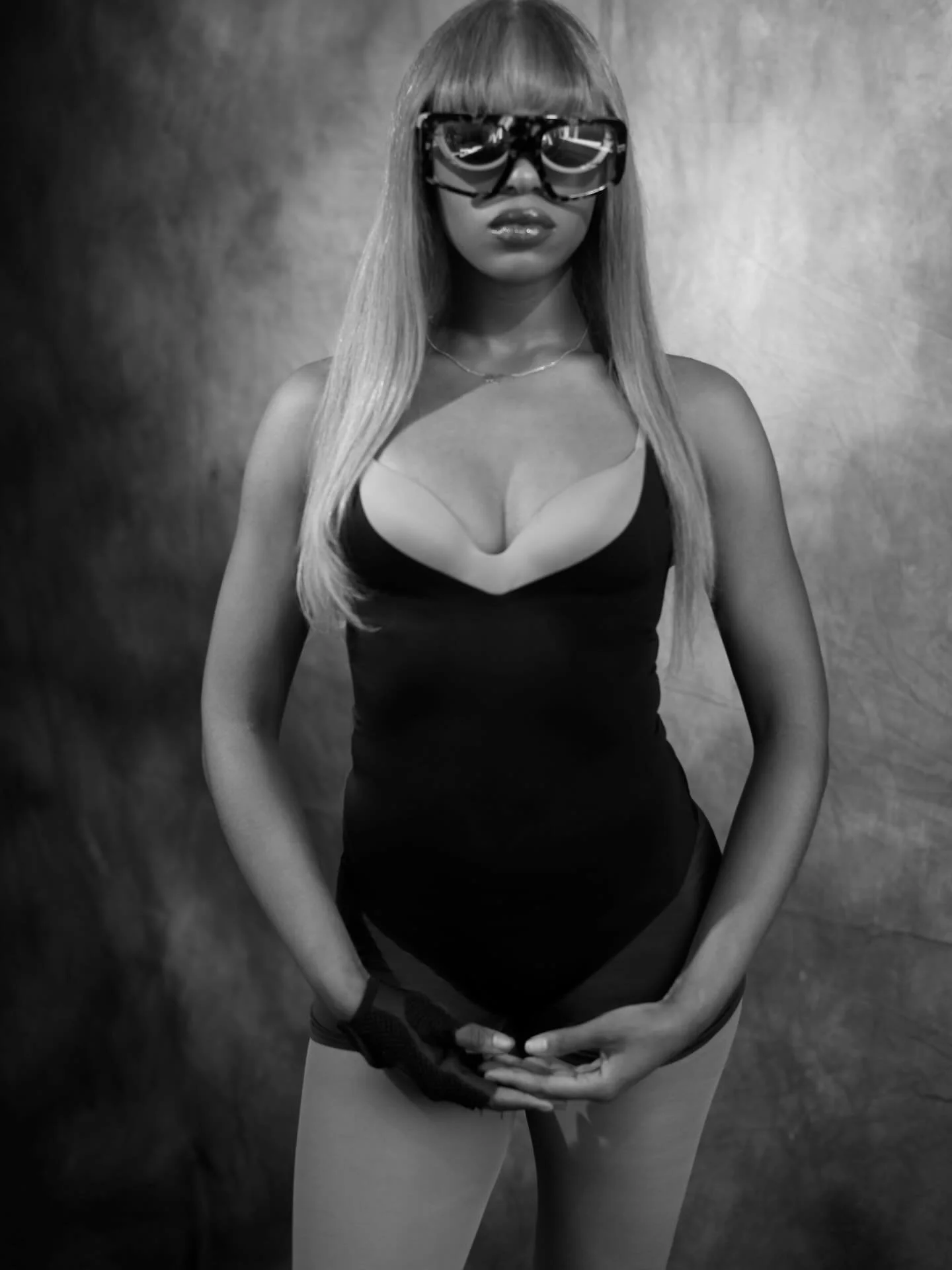
Dylan Ali
DJ & Creative
Dylan Ali reads a room for a living. As a DJ, she measures her skill not by the hits she plays but by whether every woman and every marginalized person in the room feels safe enough to enjoy themselves. It's a sensibility she traces back to the women who raised her, who taught her to find beauty in small things and to guard her joy as it matters.
What is something a Black woman before you built, taught, or protected that still shapes the way you move through the world today?
My grandmother taught me how to make a lot with a little and find the beauty in small things, to appreciate life as a greater picture. That mindset has protected me from destructive behavior, low self-esteem, comparison of self to others, and overall emotional dysregulation. There are a lot of things in life we can't control, and we can't allow that disparity to define our everyday. We must still find time to find beauty in life and celebrate for making it another day.
What's a beauty ritual, style practice, or form of self-care that was passed down to you by another Black woman? Have you kept it, transformed it, or left it behind?
You can wear anything if you're confident enough. My grandmothers, aunt, and mother always emphasized beauty coming from within and allowing that confidence to explore the unconventional parts of fashion. It becomes the most fun when you dress for your identity and not for the approval of others.
What does Juneteenth mean to you as a Black woman?
A day to celebrate our freedom from slavery and the sacrifices made by predecessors to create a better future for us to live in. Black women have been at the forefront of liberation since we arrived here. It's also a day of collectivity, to come together and celebrate Blackness. A day for us by us.
How has being a Black woman influenced the way you create, imagine, or tell stories?
It's made me pay attention to the small details in painting a broader picture, to make everyone feel seen, accepted, and comfortable. As a DJ, a lot of people play the room based on metrics and radio hits, while the real skill is ensuring women and all marginalized identities in the room feel safe enough to have a good time. My experiences as a Black woman have made that a priority.
Black women are often asked about resilience. What role does joy play in your life, and who taught you that joy was worth protecting?
My mother taught me to never compromise long-term joy over circumstances I can't control and to never let others rob me of that, no matter how close we are. She's emphasized boundaries and personal responsibility my entire life in the name of self-preservation and sustainability. We can't be there for others if we aren't there for ourselves, and that shouldn't be neglected trying to make others feel happy.
When did you first realize beauty could be something you defined for yourself rather than something defined for you?
My grandmothers and mother made sure to remind us we were beautiful no matter what society portrayed, and to always find ways to make ourselves feel that outside of materialism and superficiality. Beauty starts with small things you do for yourself out of self-love, whether that's hair and skincare, a long bath, pampering, wearing something that makes you feel confident, or simply coming as you are.
How do you take up space differently than the Black women who raised you, and what do you think made that possible?
I don't think there's much difference between myself and the Black women before me. If anything, they had higher obstacles and more to lose, which makes them gigantic space takers in my opinion. I'm able to take more risks and gamble on myself because of the barriers they broke before me. Their bravery and self-determination are the reason we are all able to live our dreams.
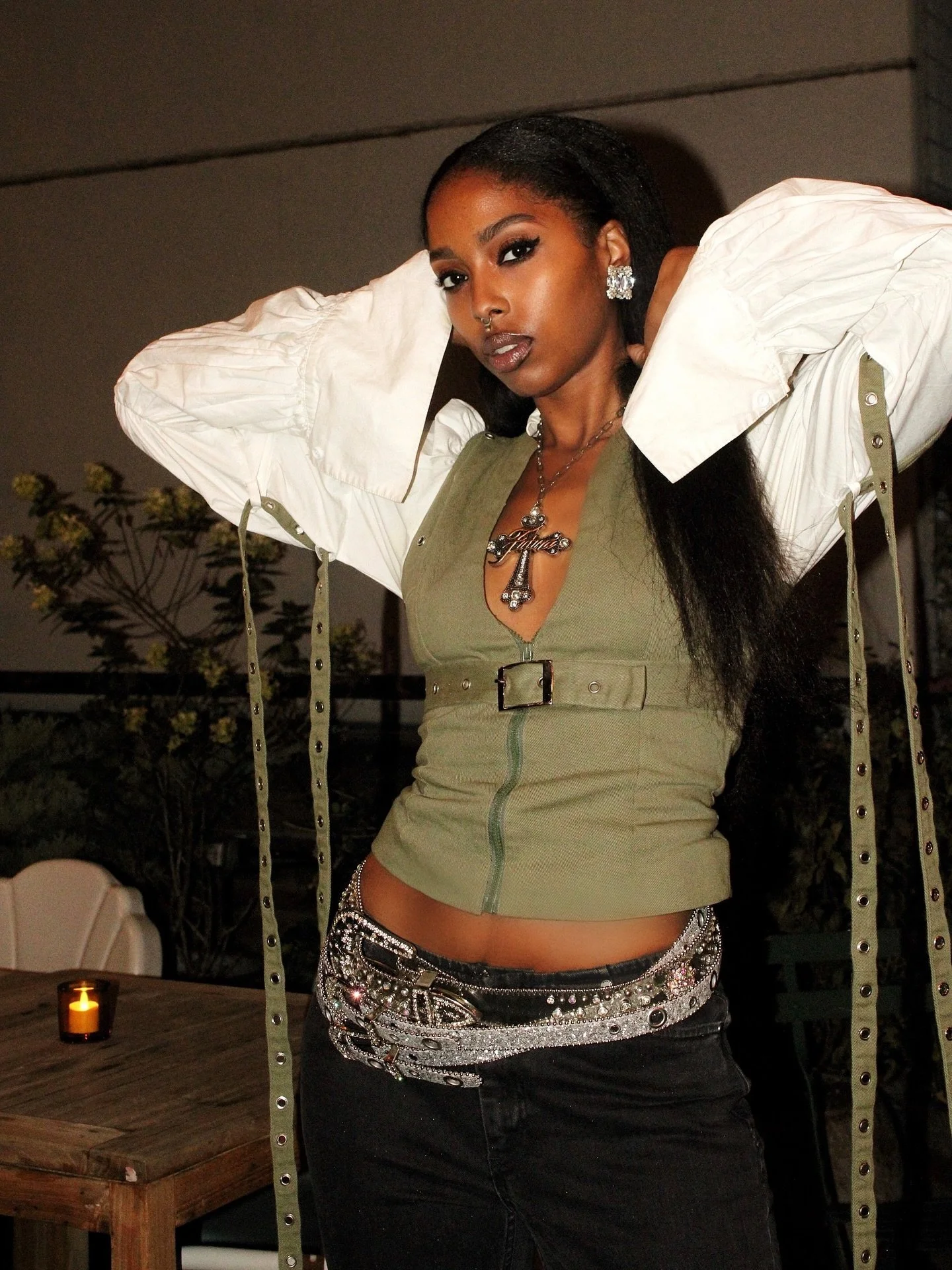
Venus Rose
Entrepreneur & Community Builder
Venus Rose builds businesses, communities, and platforms, creating access to education and technology and opening doors for people who haven't yet seen what's possible for them. The blueprint came from her grandmother, who carried herself with dignity in every circumstance and taught her that legacy is what you build and pass forward while you're still here.
What is something a Black woman before you built, taught, or protected that still shapes the way you move through the world today?
My grandmother taught me the value of faith, resilience, and showing up with dignity regardless of circumstance. She carried herself with strength while creating opportunities for her family, and that shaped how I approach entrepreneurship and leadership today. Her example taught me that legacy is not only what you leave behind. It is what you build, protect, and pass forward while you're here.
What's a beauty ritual, style practice, or form of self-care that was passed down to you by another Black woman? Have you kept it, transformed it, or left it behind?
One thing passed down to me was the idea that taking care of yourself is not vanity. It's self-respect. From skincare to presenting yourself with intention, the women in my family understood that how you care for yourself reflects how you value yourself. I've kept that lesson but transformed it into a broader practice of wellness that includes mental health, creativity, rest, and protecting my energy.
What does Juneteenth mean to you as a Black woman?
Juneteenth is a reminder that freedom is both a historical achievement and an ongoing responsibility. It represents resilience, perseverance, and the continued pursuit of equity, ownership, and opportunity. As a Black woman building businesses, communities, and platforms, Juneteenth reminds me that honoring our ancestors means creating pathways that allow future generations to thrive economically, creatively, and culturally.
How has being a Black woman influenced the way you create, imagine, or tell stories?
Being a Black woman has taught me to see possibility where others may see limitations. It has influenced me to tell stories that center humanity, culture, innovation, and representation. Much of my work is rooted in creating spaces where underrepresented voices can be seen, heard, and valued. I believe storytelling has the power to shift narratives, create opportunity, and inspire people to imagine larger futures for themselves.
Black women are often asked about resilience. What role does joy play in your life, and who taught you that joy was worth protecting?
Joy is essential. While resilience helps us endure, joy reminds us why we're building in the first place. The women who raised me taught me that laughter, celebration, creativity, and community are not distractions from the work. They are part of the work. Protecting joy is an act of preservation, and it's one of the greatest gifts we can pass on.
What does it mean to create a life that isn't just about surviving, but about thriving?
Thriving means having the freedom to dream beyond immediate needs and build toward purpose, impact, and abundance. It means creating opportunities not only for yourself, but for others. For me, thriving looks like building businesses, investing in communities, creating access to education and technology, and helping people see possibilities they may not have imagined before. It's about moving from limitation to ownership, from reaction to intention, and from survival to legacy.
What We're Still Building
What Black women built was never meant to be a monument. It was meant to be lived, passed down, and built upon. The foundation was laid. We are still building.
The Black Beauty Club is a space for Black women in beauty, culture, and beyond. Join the conversation: theblackbeautyclub.com